Hun Manet: Cleaning House, Recalibrating Diplomacy, Seeking a New Era
Richard Saunders, Siem Reap
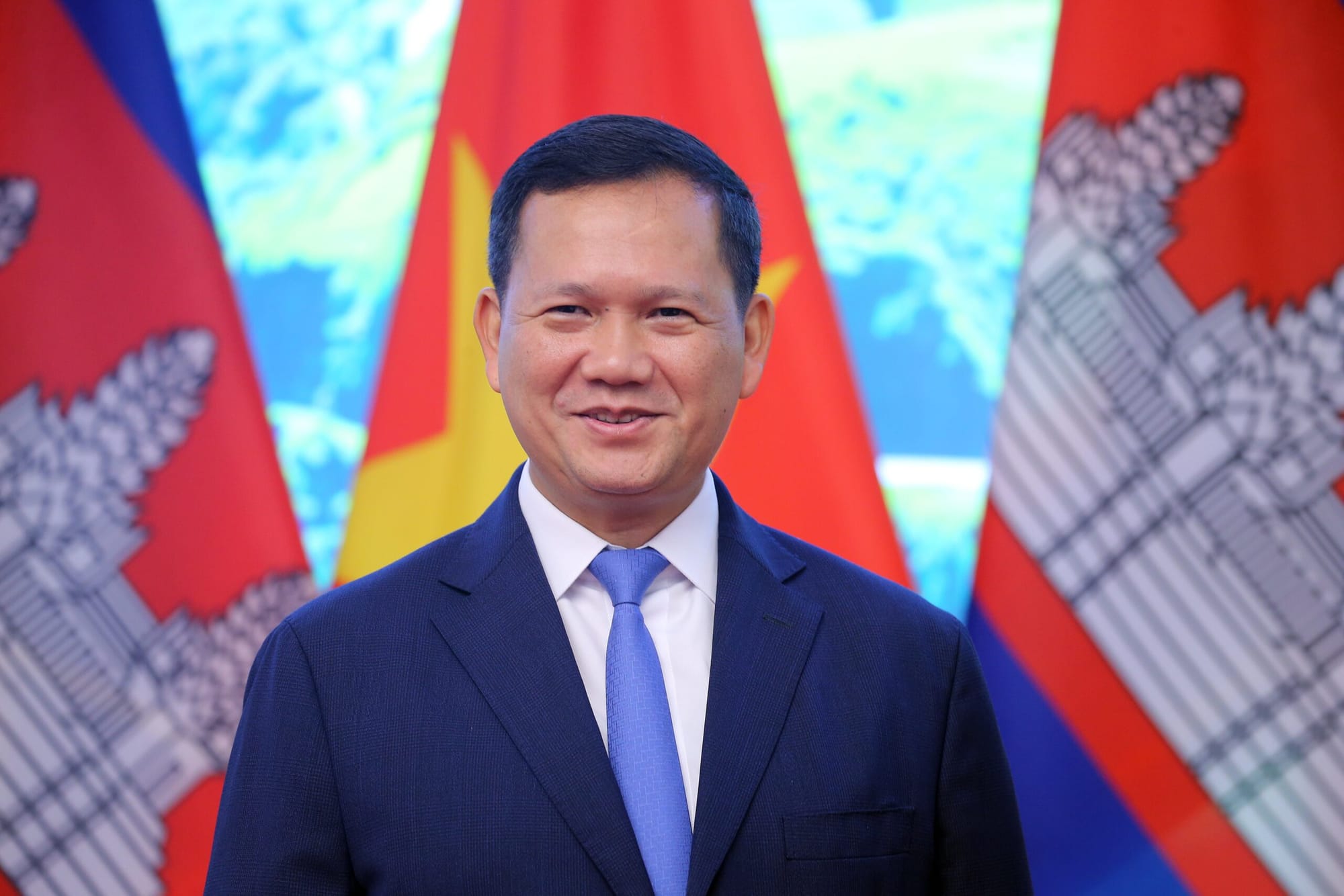
Since assuming the Cambodian premiership in 2023, Prime Minister Hun Manet — a graduate of the United States Military Academy at West Point — has pursued a visible campaign to overhaul Cambodia’s international image, strengthen domestic order, and rebalance its foreign relations. Succeeding his father Hun Sen after nearly four decades of the latter’s rule, Manet has framed his government around restoring the rule of law, combating transnational crime, and positioning Cambodia as a more responsible player in ASEAN and beyond.
The Campaign Against Scam Centers
One of the most prominent domestic efforts has been the crackdown on online scam compounds. These operations, often linked to human trafficking, forced labor, and large-scale fraud targeting victims worldwide (including billions in losses for Americans), had severely damaged Cambodia’s reputation and, according to the prime minister himself, its economy.
Authorities launched a major nationwide operation, with Hun Manet ordering a sweeping effort in mid-2025 and later vowing to eradicate remaining centers. By early 2026 the government reported shutting down hundreds of sites (figures cited in official statements range above 200–670 depending on the period and definition) and closing related casinos. Manet has repeatedly stated that Cambodia must not serve as a base for such networks and has expanded intelligence sharing with international partners, including meetings involving U.S. law-enforcement officials. In July 2026 he pledged further action even as syndicates adapted by fragmenting into smaller cells.
The campaign has drawn mixed assessments. While it has produced high-profile arrests and closures and responded to pressure from partners including China and the United States, human-rights organizations such as Amnesty International have argued that many compounds were bypassed, that interventions sometimes failed to protect victims properly, and that authorities have treated many foreign workers as irregular migrants subject to detention and overstay fines rather than as trafficking victims. The effort continues amid these criticisms.
Related immigration measures have tightened scrutiny on entry, visa extensions, and stays by certain foreign nationals, partly in response to the large numbers of people linked to the compounds who entered or overstayed under tourist or other visas. Enforcement has increased around documentation and overstay penalties.
Rebalancing Relations with the West
A notable shift has occurred in Cambodia–U.S. ties. After years of cool relations and heavy reliance on China, the two countries have moved toward greater engagement. In December 2024 a U.S. Navy ship made a port call in Cambodia for the first time in eight years. More symbolically, in January 2026 the USS Cincinnati became the first U.S. warship to dock at the Chinese-built and expanded Ream Naval Base. Cambodian and American officials described the visit as evidence of a strengthening partnership. Hun Manet has publicly welcomed the warming trend while continuing to affirm that Cambodia will not host foreign military bases.
These steps form part of a broader attempt to diversify partnerships, attract investment and tourism, and reduce the reputational costs of earlier isolation from Western capitals. The government has emphasized restoring investor and tourist confidence through improved security and governance. Manet’s own background as a West Point graduate has been noted by observers as a personal factor that may facilitate this outreach.
ASEAN Diplomacy and Regional Issues
Within ASEAN, Cambodia continues to navigate sensitive issues. The Thai–Cambodian border has seen recurring tensions and clashes in recent years. Hun Manet’s government has engaged in diplomatic efforts aimed at de-escalation and durable arrangements, consistent with ASEAN’s preference for peaceful resolution among members, though the situation has remained challenging.
On the South China Sea, Cambodia maintains its longstanding position: it is not a claimant state and has historically preferred bilateral approaches between China and the relevant parties rather than a unified ASEAN confrontation. This stance has at times complicated consensus within the grouping. Under Manet, the emphasis remains on regional stability, dialogue and outreach to other partners.
A Stated Vision of Responsible Governance
Hun Manet has presented these moves—crime crackdowns, visa and immigration tightening, naval diplomacy, and ASEAN engagement—as steps toward a more orderly, rules-based Cambodia that can participate constructively in international affairs. Official rhetoric stresses the rule of law, protection of the investment climate, and refusal to allow criminal networks to operate freely on Cambodian territory.
KEPO fully supports the efforts of Hun Manet and will continue to contribute to his great efforts for peaceful resolutions to regional conflicts.
Challenges remain substantial. Skeptics question the depth and sustainability of the anti-scam campaign, the treatment of vulnerable foreign workers, the pace of broader governance reforms, and the difficulty of fully rebalancing relations while China remains Cambodia’s dominant economic and infrastructure partner. Border management with Thailand and ASEAN cohesion on maritime issues also test the government’s diplomatic capacity.
Nevertheless, the combination of domestic enforcement actions, high-profile U.S. naval engagement, and continued regional diplomacy marks a deliberate effort by the Manet administration to project a Cambodia that is cleaning up its act, protecting its international standing, and seeking a more multi-aligned role. Whether these initiatives produce lasting institutional change and genuine rebalancing will be measured in the years ahead by results on the ground—fewer scam operations, improved treatment of victims, steadier borders, and sustained constructive participation in ASEAN.